
What is an apostille?
An apostille is an official certificate that authenticates a public document so it can be presented in another country that participates in the Hague Apostille Convention.
In simple terms, an apostille helps a foreign authority answer an important question:
Can I rely on the official signature, seal or stamp appearing on this Canadian document?
The apostille does not normally confirm that every statement inside the document is true. It authenticates the relevant public signature, the capacity in which the person signed and, where applicable, the identity of the seal or stamp.
Canada became a party to the Hague Convention of 5 October 1961 Abolishing the Requirement of Legalisation for Foreign Public Documents, commonly called the Apostille Convention, on January 11, 2024. The Convention replaced much of Canada's former authentication-and-consular-legalization process for documents going to other Convention countries.
The Government of Ontario's authentication guidance explains that Official Documents Services, commonly called ODS, issues apostilles for eligible Ontario documents. The Hague Conference on Private International Law provides the international legal framework for the apostille system.

The 30-second explanation
If you need to use an Ontario document in another country, the process often looks like this:
- Determine what document the foreign recipient actually requires.
- Determine whether that document must be notarized first or can go directly for authentication.
- Submit the eligible document to the correct Canadian competent authority.
- If the destination is a country where the Apostille Convention applies, the competent authority issues an apostille.
- The document is then presented to the foreign recipient, subject to any translation, registration or other local requirements.
For many Ontario documents, the competent authority is Official Documents Services in Ontario.
For certain federal Canadian documents, such as documents issued by the Government of Canada or the RCMP, the competent authority is generally Global Affairs Canada.
The correct authority depends on where the document was issued, where it was notarized and what type of document it is.
Why was the apostille system created?
Before the Apostille Convention, using a public document abroad could involve a lengthy chain of authentication and legalization.
A document might first have to be notarized, then authenticated by a government authority and finally legalized at the embassy or consulate of the country where it would be used.
The Hague Apostille Convention was created to simplify that process between participating countries.
Instead of requiring diplomatic or consular legalization in the ordinary Convention process, the country where the document originates issues a standardized certificate called an apostille.
The Convention has become one of the most widely used international legal-cooperation treaties. The HCCH Apostille Convention status table lists the current contracting parties.
What changed in Canada on January 11, 2024?
Canada formally acceded to the Apostille Convention in 2023, and the Convention entered into force for Canada on January 11, 2024.
Before that date, Canadian documents commonly followed an authentication and legalization process.
After January 11, 2024, an eligible Canadian public document intended for a country where the Convention applies can generally receive an apostille instead of going through the traditional consular legalization chain.
The Government of Canada described the change as a way to simplify the use of Canadian birth certificates, marriage certificates, educational documents, corporate records and other public documents abroad. See Canada joins Apostille Convention.
Important: An apostille simplifies authentication. It does not decide whether a foreign organization will accept the underlying document for the particular transaction. The receiving authority's requirements still matter.
Apostille, notarization, authentication and legalization are not the same thing
These terms are often used interchangeably in everyday conversation, but they describe different legal or administrative functions.
| Term | What it generally means | Who performs it |
|---|---|---|
| Notarization | A notarial act such as witnessing a signature or certifying a true copy | A notary public |
| Authentication | Government verification of the relevant public or notarial signature, seal or stamp | A designated government authority |
| Apostille | The standardized authentication certificate used under the Hague Apostille Convention | A competent authority designated under the Convention |
| Legalization | Additional certification, traditionally involving the foreign embassy or consulate | Usually the diplomatic or consular authority of the destination country |
The Global Affairs Canada authentication glossary distinguishes these concepts and explains that an apostille is a particular form of authentication used under the Apostille Convention.
What does an apostille actually prove?
This is one of the most important points to understand.
An apostille generally authenticates:
- the signature appearing on the public document
- the capacity in which the signer acted
- where appropriate, the identity of the seal or stamp on the document
An apostille does not ordinarily certify:
- that every factual statement in the document is correct
- that a contract is legally enforceable
- that a power of attorney contains sufficient powers for a particular transaction
- that a diploma holder actually completed every requirement claimed beyond what the issuing document represents
- that a person named in a document is still alive
- that a document has not expired
- that a foreign institution must accept the document
- that a translation is accurate unless the translation itself has been properly dealt with under the applicable process
Ontario explains that ODS authenticates a document by comparing the relevant signature and seal or stamp with information available in its records. ODS does not validate the substantive contents of the document. See Ontario's official authentication guidance.
An apostille authenticates the public-document chain. It is not a government guarantee of every statement written inside the document.
A simple example
Suppose Maria lives in Toronto and must send an Ontario marriage certificate to a foreign authority.
The foreign authority says:
Provide your Canadian marriage certificate with an apostille.
If Maria has an eligible Ontario marriage certificate issued by the provincial vital-statistics authority, it may qualify for direct authentication by Ontario without first being notarized.
Ontario verifies the appropriate official signature or issuing information and attaches an apostille.
The apostille helps the foreign authority recognize the Canadian public document.
It does not independently investigate whether every underlying fact recorded when the marriage was registered was true.
Who issues apostilles in Ontario?
For eligible Ontario documents, apostilles are issued through the Government of Ontario's Official Documents Services.
Ontario is one of the Canadian jurisdictions designated as a competent authority under Article 6 of the Hague Apostille Convention.
The HCCH currently lists Canada's competent authorities as including the federal government and designated authorities in Ontario, Alberta, British Columbia, Quebec and Saskatchewan. See the HCCH list of Canadian competent authorities.
For Ontario matters, always use the current Government of Ontario instructions rather than an old address or procedure found on a third-party website.
Where is Official Documents Services in Ontario?
As of September 2026, Ontario lists its principal Official Documents Services location at:
Official Documents Services ServiceOntario, Toronto College Park 777 Bay Street, Lower Level Toronto, Ontario M7A 2J8
Ontario also identifies selected ServiceOntario locations where in-person authentication requests may be submitted, including locations in Ottawa, Sault Ste. Marie, Windsor and Thunder Bay.
Addresses, hours and submission procedures can change. Always verify the current information on the Government of Ontario authentication page before attending or mailing documents.
Does every Ontario document need to be notarized before an apostille?
No.
This is one of the most common misconceptions about apostilles.
Since Canada's accession to the Apostille Convention, Ontario permits several categories of Ontario public documents to be authenticated directly without prior notarization, provided they meet the applicable requirements.
Ontario currently identifies categories including:
- Ontario vital-statistics documents, including eligible birth, marriage, death and name-change documents
- Ontario business-registry documents issued through the applicable provincial registry systems
- qualifying Ontario court-issued documents
- qualifying Ontario public postsecondary degrees, diplomas and transcripts
Other documents may still require notarization before ODS can authenticate them.

Ontario vital-statistics documents
Ontario lists eligible vital-statistics documents among the categories that may be authenticated directly.
Examples can include government-issued:
- birth certificates
- marriage certificates
- death certificates
- change-of-name certificates
This means you should not automatically obtain a notarized photocopy merely because you need an apostille.
If the receiving authority requires the government-issued certificate itself, notarizing a photocopy may produce the wrong document for the intended purpose.
Example: Ontario birth certificate for use abroad
A parent needs an Ontario birth certificate for a child's citizenship-registration application overseas.
The foreign authority says it requires:
- the Canadian birth certificate
- an apostille
- a translation
If the Ontario birth certificate qualifies for direct authentication, there may be no reason to notarize a photocopy first.
The parent should submit the appropriate government-issued certificate through the Ontario apostille process and then satisfy the destination's translation requirements.
Ontario court documents
Ontario's rules distinguish between court documents depending on when and how they were issued.
Ontario currently states that qualifying documents issued by the Superior Court of Justice or Ontario Court of Justice on or after July 10, 2023 may be eligible for direct authentication without prior notarization.
Older court documents may be treated differently.
For Certificates of Divorce issued before July 10, 2023, Ontario indicates that a person may have the certificate reissued so that the newly issued document can qualify for authentication, or may follow another permitted route.
Other older court-issued documents may still require notarization.
Always review the current court-document rules before assuming which route applies.
Example: Certificate of Divorce for remarriage abroad
Suppose a person divorced in Toronto and is now getting married in another country.
The foreign civil-registry authority asks for an apostilled Canadian Certificate of Divorce.
The correct procedure may depend on the date and form of the certificate.
A recently issued qualifying Certificate of Divorce may be eligible for direct Ontario authentication. An older version may require reissuance or notarization first.
The apostille confirms the relevant public-document authentication. It does not decide whether the foreign marriage registry requires additional evidence, such as a translation or proof of capacity to marry.
Ontario university and college documents
Ontario currently allows qualifying public postsecondary degrees, diplomas and transcripts issued since January 1, 2019 to be considered for direct authentication without prior notarization.
This can be particularly useful for people using Ontario education documents for:
- employment abroad
- university admission abroad
- professional licensing
- immigration
- credential recognition
- work permits
- teaching positions
- regulated professions
However, the foreign recipient may impose its own requirements.
For example, a university might demand that a transcript be sent directly from the educational institution. An apostilled photocopy would not necessarily replace that requirement.
Ontario business-registry documents
Certain documents issued by Ontario's business registries can also qualify for direct authentication.
Ontario currently lists eligible records issued through the Business and Personal Property Branch or Ontario Business Registry, subject to the applicable criteria.
Examples of international business matters that can involve apostilled corporate documents include:
- opening a foreign corporate bank account
- registering a Canadian company abroad
- establishing a subsidiary
- foreign tender submissions
- corporate due diligence
- appointing representatives abroad
- foreign tax registrations
- cross-border commercial transactions
The specific foreign authority should tell you which corporate record it needs and how recently it must have been issued.
Which documents often require notarization first?
Documents that are not independently verifiable as qualifying public documents may require a notarial step before authentication.
Common examples can include:
- powers of attorney
- consent letters
- private agreements
- certified true copies of certain documents
- declarations
- corporate documents not directly eligible for government authentication
- signatures on documents intended for foreign use
- privately prepared authorization documents
Whether notarization is required depends on the document, its origin and the destination requirements.
Why would notarization be needed before an apostille?
A government authentication office needs a public signature or seal that it can verify.
For a private document, there may be no government official's signature on the document.
An Ontario notary public can perform an appropriate notarial act. Ontario's Official Documents Services can then verify the notary's signature and seal against the specimen on file.
Ontario's Notaries Act gives a notary public authority, subject to applicable restrictions, to witness or certify execution of documents and to certify true copies.
The Government of Ontario's information for notaries public explains the province's current requirements for notarial signatures and seals.
A power of attorney example
Powers of attorney are among the most common documents people send abroad.
Imagine that Alex lives in Ontario but owns an apartment overseas. He needs to authorize a family member to deal with the property.
The foreign lawyer prepares a power of attorney and tells Alex:
Sign this document before an Ontario notary and obtain an apostille.
The process may look like this:
- Alex confirms the final form of the power of attorney with the foreign lawyer or receiving authority.
- Alex attends before an Ontario notary in person.
- The notary verifies Alex's identity and witnesses or certifies the execution as appropriate.
- The notary applies the required signature and notarial seal.
- The notarized document is submitted to Ontario Official Documents Services.
- Ontario verifies the notary's signature and seal.
- Ontario issues an apostille if the destination is covered by the Convention.
- Alex sends the completed document to the foreign recipient.
- Any destination-country translation, registration or filing requirements are completed.
The apostille authenticates the Ontario notarial act. It does not confirm that the power of attorney gives exactly the powers required under the foreign country's property law.
That is why the foreign recipient should approve the document before it is signed whenever possible.
Certified true copies and apostilles
A notary may also certify a document as a true copy of an original where legally and practically appropriate.
Ontario's Notaries Act expressly authorizes a notary public to certify and attest a true copy of a document, subject to any applicable appointment restrictions.
However, a certified copy should not automatically be created whenever an apostille is needed.
For some categories, the receiving country may require the actual government-issued original.
For others, a notarized certified copy may be acceptable and may allow the owner to preserve the original.
Always distinguish between:
- original document
- photocopy
- notarial certified true copy
- issuer-certified copy
- apostilled original
- apostilled notarized copy
These are not interchangeable.
Notary public versus commissioner for taking affidavits
This distinction becomes particularly important for apostille work in Ontario.
A notary public and a commissioner for taking affidavits are not the same office.
A commissioner can take affidavits, declarations and affirmations within the commissioner's authority.
A notary has broader notarial powers, including the ability to certify true copies and perform other notarial acts within the notary's authority.
Ontario currently states that documents commissioned by a Commissioner for Taking Affidavits are not eligible for authentication through ODS merely because they were commissioned.
If you know that a document will need an apostille, tell the professional handling the document before it is signed.
A document intended for international authentication may need a proper notarial act, not simply commissioning.
Can an Ontario notary notarize a document remotely for apostille?
Ontario's current guidance states that notarization under the Notaries Act must be performed in person and that remote notarization is not permitted under the Act.
Ontario also states that documents notarized remotely will not be authenticated or apostilled by ODS.
This should not be confused with certain remote commissioning procedures that may be legally available for affidavits or declarations under separate rules.
If the final document needs an Ontario apostille, determine the required notarial format before proceeding remotely.
What about a document issued by the Government of Canada?
Not every document located in Ontario belongs in the Ontario apostille stream.
Global Affairs Canada generally handles documents issued by the Government of Canada, including federal departments and agencies.
One common example is an RCMP criminal record document.
The federal authentication rules are explained by Global Affairs Canada.
Example: RCMP criminal record check for employment abroad
An employer overseas asks for an apostilled Canadian criminal record check.
If the document is an eligible federal RCMP document, the competent authority may be Global Affairs Canada rather than Ontario ODS.
The applicant should confirm:
- whether an original federal record is required
- whether fingerprints are required
- whether the document must have been issued recently
- whether a translation is required
- whether the foreign employer or authority requires any additional certification
Do not send every Canadian document to the same apostille office.
Which Canadian authority should receive my document?
A useful starting point is:
| Document connection | Authority commonly responsible |
|---|---|
| Eligible Ontario-issued document | Ontario Official Documents Services |
| Document notarized by an Ontario notary | Ontario Official Documents Services, subject to eligibility |
| Government of Canada document | Global Affairs Canada |
| Eligible Alberta document | Alberta competent authority |
| Eligible British Columbia document | British Columbia competent authority |
| Eligible Quebec document | Quebec competent authority |
| Eligible Saskatchewan document | Saskatchewan competent authority |
| Documents from Manitoba, New Brunswick, Newfoundland and Labrador, Northwest Territories, Nova Scotia, Nunavut, Prince Edward Island or Yukon | Generally Global Affairs Canada under the federal allocation system |
The detailed allocation is explained in Global Affairs Canada's authentication requirements.
Does the country where the document will be used matter?
Absolutely.
The destination country is one of the first facts that should be identified.
There are two broad situations.
Destination is covered by the Apostille Convention
If the document is going from Canada to a country for which the Hague Apostille Convention applies, the Canadian competent authority can issue an apostille for an eligible document.
The apostille generally replaces the old requirement for consular legalization under the Convention.
Destination is not covered by the Apostille Convention
If the destination is not within the applicable Convention relationship, the traditional authentication and legalization process may still be required.
Global Affairs Canada explains that documents intended for non-Convention destinations may need an authentication certificate followed by legalization at the embassy, high commission or consulate of the destination country.
Because treaty participation can change, verify the destination in the current HCCH Apostille Convention status table.

Using an Ontario document in Ukraine
Ukraine is a party to the Hague Apostille Convention. The HCCH status table records Ukraine's accession and the Convention's entry into force for Ukraine in 2003.
Canada is also a party, with the Convention in force for Canada since January 11, 2024.
Accordingly, an eligible Canadian public document intended for use in Ukraine will generally follow the apostille route rather than the traditional Canadian authentication plus Ukrainian consular legalization route, subject to the requirements of the Ukrainian authority receiving the document.
Example: Ontario power of attorney for Ukraine
Suppose a Ukrainian-Canadian resident of Toronto needs to authorize a relative in Ukraine to sell an apartment.
A practical workflow may be:
- Obtain the final Ukrainian power-of-attorney wording from the Ukrainian lawyer or notary handling the transaction.
- Confirm whether the document should be prepared in English, Ukrainian or bilingual form.
- Sign the document before an Ontario notary if an Ontario notarial act is required.
- Ensure the notary's signature and seal satisfy Ontario's requirements for authentication.
- Submit the eligible notarized document to Ontario Official Documents Services.
- Obtain the apostille.
- Complete any translation or Ukrainian notarial formalities required by the receiving authority.
- Send the complete package to Ukraine.
Apostilling the Ontario notary's signature does not mean Ontario has reviewed the Ukrainian property powers in the document.
For a sale, gift, inheritance, deregistration, banking authority or other significant transaction, the Ukrainian professional receiving the document should confirm the wording before execution.
Example: Ontario marriage certificate for Ukraine
A person married in Ontario may need the marriage certificate in Ukraine for:
- civil-status registration
- surname changes
- citizenship-related procedures
- inheritance
- family matters
- property transactions
- pension or administrative procedures
If the receiving Ukrainian authority requires an apostilled Ontario marriage certificate, an eligible government-issued Ontario certificate may qualify for direct authentication without prior notarization.
The recipient may also require a Ukrainian translation or another local formality.
Example: Ontario birth certificate for Ukraine
An Ontario birth certificate may be required in Ukraine for matters involving:
- children
- citizenship
- guardianship
- inheritance
- civil registration
- family relationships
Again, determine whether the Ukrainian recipient wants the original Ontario-issued certificate, a certified copy or another format before obtaining the apostille.
Does Ukraine require a translation after the apostille?
An apostille does not translate the document.
A Canadian document written in English or French may need to be translated for use before a Ukrainian authority.
The precise translation formalities depend on the Ukrainian procedure and receiving authority.
The Ministry of Foreign Affairs of Ukraine provides official information about Ukraine's apostille framework and competent authorities for Ukrainian documents.
For a Canadian document being used in Ukraine, the person should also obtain instructions from the Ukrainian authority, lawyer, notary, registry, court or other institution that will actually receive it.

Can Ontario apostille a Ukrainian document?
Usually, no.
This is a critical distinction.
An apostille is normally issued by a competent authority of the country from which the public document originates.
If your birth certificate was issued in Kyiv, Lviv, Odesa or another place in Ukraine, Ontario does not transform that Ukrainian public document into an Ontario document merely because you now live in Toronto.
Ontario explicitly states that documents issued outside Canada are generally not eligible for authentication as foreign public documents through Ontario.
A Ukrainian-issued public document normally needs to follow the apostille procedure available through the competent Ukrainian authority.
Limited Ontario exception involving a signature
Ontario identifies a limited situation involving a foreign-issued document on which a signature is sworn or witnessed by an Ontario notary public.
In such a case, Ontario may be authenticating the Ontario notarial signature, not authenticating the foreign government's original document itself.
That difference matters.
Do not assume that notarizing a Ukrainian certificate in Toronto gives Ontario authority to apostille the Ukrainian certificate as if Ontario had issued it.
Using an Ontario document in Russia
The Russian Federation is also a party to the Hague Apostille Convention.
The current HCCH status table lists the Russian Federation as a contracting party, and Canada's Convention participation has been in force since January 11, 2024.
The Consulate General of the Russian Federation in Toronto states that Russia and Canada participate in the Hague Apostille Convention and that documents authenticated with an apostille of a participating country are exempt from further consular validation under the Convention.
This means the apostille route has substantially changed the process for eligible Canadian documents intended for Russia.
Example: Canadian marriage certificate for a Russian consular matter
A Russian citizen living in Ontario may need a Canadian marriage certificate to document a surname change or marital status.
The Russian Consulate General in Toronto currently states in several of its consular instructions that certain Canadian civil-status documents used for Russian procedures must be apostilled.
Depending on the procedure, a Russian translation may also be required and the translation may need to be certified in a manner acceptable under Russian requirements.
The exact consular instructions for the transaction should be checked before the document is prepared.
Example: Ontario power of attorney for use in Russia
Suppose a Toronto resident needs to authorize someone in Russia to deal with property, inheritance or another transaction.
A possible process is:
- Obtain wording approved by the Russian lawyer, notary or organization receiving the document.
- Execute the document before an Ontario notary where required.
- Obtain an Ontario apostille for the eligible notarized document.
- Arrange the Russian translation and any certification required by the recipient.
- Deliver the completed package to Russia.
The Russian Consulate General's apostille guidance explains that an apostille replaces consular legalization for applicable documents between Convention participants.
Can Ontario apostille a Russian birth certificate or other Russian public document?
Generally, no.
A Russian birth certificate remains a Russian public document even if its owner lives in Ontario.
The Russian Consulate General's guidance explains that an apostille is placed in the country in which the document was originally issued. It gives the example that a Russian birth certificate must be apostilled in Russia.
Ontario's own rules similarly state that foreign-issued public documents are generally not eligible for Ontario authentication.
This principle also applies to many other foreign documents.
Living in Ontario does not change the country that issued your original public document.
Ukrainian and Russian documents: a practical comparison
| Situation | Typical starting point |
|---|---|
| Ontario birth certificate being used in Ukraine | Ontario apostille process, subject to Ukrainian recipient requirements |
| Ontario power of attorney being used in Ukraine | Ontario notarization may be required, followed by Ontario apostille |
| Ukrainian birth certificate being used in Canada | Apostille or other authentication, if requested by the Canadian recipient, is obtained through the competent Ukrainian process |
| Ontario marriage certificate being used in Russia | Ontario apostille process, plus any required Russian translation or procedural steps |
| Ontario notarized power of attorney being used in Russia | Ontario apostille process, subject to Russian recipient requirements |
| Russian birth certificate being used abroad | Apostille obtained through the appropriate Russian competent authority, not Ontario |
These examples describe the authentication pathway only. The receiving institution may impose additional substantive requirements.
What if my document is written in Ukrainian, Russian or another language?
Ontario has specific rules for documents in languages other than English or French that are submitted for authentication.
Ontario currently states that qualifying Canadian-issued documents in another language must satisfy requirements that can include:
- being issued within Canada
- notarization by an Ontario notary public
- an accompanying translation
Ontario recognizes translation pathways including a translation by a Certified Canadian Translator or, in an appropriate case, an attestation by a qualifying Ontario notary who speaks the relevant languages and certifies the accuracy of the translation.
The exact current requirements are set out on the Ontario document-authentication page.
Do not assume that simply attaching an informal translation is enough.
Should the apostille itself be translated?
Whether the apostille, the underlying document or both need translation is determined largely by the destination country's rules and the receiving institution.
The Apostille Convention establishes a standardized certificate, which makes recognition easier internationally, but it does not prevent a receiving authority from requiring a translation of the underlying document for its own procedure.
For Ukraine, Russia and other non-English-speaking destinations, always ask whether the recipient requires:
- translation of the document
- translation of the apostille
- certified translation
- notarized translation
- translation completed in the destination country
- translation completed by a particular category of translator
Does an apostille expire?
The Government of Canada currently states that apostilles and authentication certificates it issues do not have an inherent expiry date.
However, that does not mean the underlying document will be accepted forever.
A foreign authority may require, for example:
- a criminal record check issued within three or six months
- a recent corporate search
- a recently issued civil-status certificate
- a current professional licence
- a recent power of attorney
The age of the underlying document and the validity of the apostille are separate questions.
What documents are commonly apostilled in Ontario?
Ontario apostille requests can arise in almost every area of personal and commercial life.
Common examples include:
- birth certificates
- marriage certificates
- death certificates
- change-of-name certificates
- Certificates of Divorce
- court orders
- judgments
- university diplomas
- degrees
- academic transcripts
- powers of attorney
- certified true copies
- consent letters
- corporate documents
- business-registry records
- declarations
- professional documents
- certain notarized agreements
- documents relating to inheritance
- documents relating to foreign property
Eligibility and preparation requirements differ by document type.

Apostille for a birth certificate
A birth certificate may be required abroad for:
- citizenship
- immigration
- marriage registration
- child registration
- inheritance
- education
- family reunification
- pension matters
- foreign residency
Ontario-issued vital-statistics documents may qualify for direct authentication.
The foreign recipient may specifically require a long-form or parental-information version rather than another type of certificate. The apostille process does not determine which version your foreign procedure requires.
Ask first.
Apostille for a marriage certificate
Marriage certificates are commonly apostilled for:
- registering a marriage abroad
- changing a surname
- immigration
- citizenship
- pension claims
- inheritance
- foreign property matters
- family-law procedures
Be careful not to confuse a government-issued marriage certificate with a marriage licence, church certificate or other commemorative document.
The foreign authority may require a particular government-issued record.
Apostille for a death certificate
Death certificates may be used abroad for:
- inheritance
- estate administration
- property transfers
- bank accounts
- pension termination
- insurance claims
- civil-status registration
A funeral-home document and a provincial government death certificate are not necessarily interchangeable for authentication purposes.
Confirm the required document with the foreign recipient.
Apostille for a diploma or degree
Education documents may be needed for:
- professional licensing
- employment
- postgraduate study
- immigration
- credential recognition
- teaching abroad
- regulated professions
Qualifying Ontario public postsecondary degrees, diplomas and transcripts issued since January 1, 2019 may qualify for direct authentication under Ontario's current rules.
Older documents or documents from private institutions may follow different procedures.
Apostille for a transcript
Transcripts are particularly sensitive to recipient-specific rules.
A university, licensing body or credential-assessment organization may require the transcript to be:
- sent directly by the university
- enclosed in a sealed envelope
- electronically transmitted
- apostilled
- notarized and apostilled
- issued recently
Do not open a sealed academic package merely to pursue an apostille without first checking the institution's requirements.
Apostille for a court order or divorce document
Court documents may be needed abroad for:
- remarriage
- enforcement
- recognition of divorce
- custody matters
- immigration
- citizenship
- foreign litigation
- inheritance
Ontario's direct-authentication rules depend partly on when the court document was issued.
Use the current Ontario guidance to determine whether the document can be authenticated directly or must first be notarized or reissued.
Apostille for a power of attorney
A power of attorney is a classic example of a private legal document that may require an Ontario notarial act before apostille.
The most important practical rule is:
Obtain the foreign recipient's required wording before signing.
A Canadian notary can notarize the execution where legally appropriate, but the notary's role in authentication does not automatically include drafting or confirming the sufficiency of foreign legal powers.
A foreign property authority might require specific powers relating to:
- sale
- purchase
- gift
- registration
- bank accounts
- tax authorities
- municipal authorities
- utility services
- inheritance
- litigation
- representation before a notary
Missing a required power can make the document unusable even though it was perfectly notarized and apostilled.
Apostille for a travel consent letter
Parents may sometimes be asked to provide formal consent documents for a child travelling, residing, studying or completing administrative procedures abroad.
If a foreign authority requires an apostilled consent document, the document may need to be signed before a notary and then authenticated.
However, not every ordinary Canadian child-travel consent letter requires an apostille.
Ask the airline, border authority, foreign consulate or recipient what is actually required.
Apostille for corporate documents
International business transactions can involve apostilles for documents such as:
- corporate resolutions
- certificates of incorporation
- articles
- powers of attorney
- director or officer certificates
- signing-authority documents
- business-registry records
- declarations
Some Ontario registry records qualify for direct authentication. Private corporate instruments may require notarization.
The exact route depends on the document.
What documents cannot normally be authenticated by Ontario?
Ontario identifies several categories that are not eligible for its authentication process.
Examples currently include:
- documents issued outside Canada, subject to a narrow exception concerning Ontario notarization of signatures
- documents merely commissioned by a Commissioner for Taking Affidavits
- certain religious documents
- documents that have already gone through certain legalization processes
- pseudo-legal or fraudulent documents
Ontario also requires documents to be submitted in hard-copy form for its authentication process. Soft-copy electronic documents are not authenticated through ODS under the current procedure.
Can I send a PDF for an apostille?
A PDF on your phone or computer is not automatically eligible for apostille merely because it appears official.
Ontario currently requires a hard-copy document for its authentication process.
If the original document was generated electronically, determine whether:
- an official paper version is available
- a printed version carries a verifiable official signature
- notarization is needed
- the issuing authority can provide an authentication-ready document
Do not print an arbitrary PDF and assume that it has become an eligible public document.
Can a laminated document be apostilled?
Lamination can create authentication problems because it may interfere with seals, stamps, signatures or physical examination.
Global Affairs Canada specifically identifies laminated documents among documents that may not meet its federal authentication requirements.
If a document has been laminated, check the applicable competent authority's requirements before sending it.
The apostille process in Ontario, step by step
Step 1: Ask the foreign recipient what it requires
Do this before notarization.
Ask:
- Do you require the original document?
- Is a certified copy acceptable?
- Must it be notarized?
- Do you require an apostille?
- Is a translation required?
- Does the translation need separate certification?
- Is there a document-age requirement?
- Are all pages required?
- Is a particular form or wording required?
Step 2: Identify where the document was issued
Determine whether the document is:
- Ontario-issued
- issued by the Government of Canada
- issued in another province
- issued outside Canada
This can determine the competent authority.
Step 3: Determine whether notarization is required
Some Ontario public documents can proceed directly.
Others require an Ontario notarial act first.
Do not pay for unnecessary notarization.
Step 4: Complete any required notarization correctly
If notarization is required, make sure the notary knows that the document is intended for apostille.
Ontario's government must be able to verify the notary's signature and seal against its records.
Step 5: Address translation requirements
If the document is not in English or French, determine Ontario's translation requirements before submission.
Separately determine what translation the destination country requires.
These can be two different questions.
Step 6: Submit the document to the correct competent authority
For an eligible Ontario document, this is generally Ontario Official Documents Services.
For a qualifying federal document, it may be Global Affairs Canada.
Step 7: Receive the apostille
The competent authority verifies the relevant signature and seal or stamp and attaches or issues the apostille certificate.
Step 8: Complete destination-country requirements
Depending on the country and transaction, these may include:
- translation
- registration
- filing with a notary
- submission to a court
- submission to a civil registry
- submission to a bank
- submission to a professional regulator
The apostille is often an important step, but it may not be the final step.
How much does an Ontario apostille cost?
Ontario's government fees depend on the type of document being authenticated.
As of September 2026, Ontario's published schedule lists fees including:
| Document type | Ontario government authentication fee |
|---|---|
| Notarized legal document | $16 per document |
| Ontario government official document | $32 per document |
| Ontario court-issued document | $32 per document |
| Ontario public postsecondary degree, diploma or transcript | $32 per document |
These are government authentication fees and do not necessarily include:
- notary fees
- certified-copy fees
- translation fees
- printing
- courier charges
- replacement certificates
- foreign professional fees
Fees can change. Confirm the current amount on the Government of Ontario authentication page before submission.
How long does an apostille take in Ontario?
Processing time depends on how the request is submitted, the document type and current government workload.
Ontario's published information currently states that mailed requests are generally processed within approximately 15 business days after ODS receives the documents, subject to complete documentation and successful verification.
Ontario also offers in-person submission options. The government notes that processing circumstances can differ for certain documents, including some court-issued documents.
Do not treat a general processing estimate as a guarantee.
Allow additional time for:
- notarization
- obtaining replacement documents
- translations
- mailing or courier service
- destination-country processing
Does Ontario offer an online apostille?
Ontario provides an online portal for parts of the application and eligibility process, but the government currently requires the actual document to be submitted in hard-copy form for authentication.
The online process therefore does not mean that an electronic PDF receives a purely digital apostille without submission of the required physical document.
Can an Ontario apostille be verified?
Ontario provides a verification mechanism for apostilles it issues.
The Government of Ontario indicates that verification requires information such as the apostille number and issuance date.
Online apostille verification is increasingly important internationally because it allows receiving organizations to check whether an apostille was genuinely issued by the stated competent authority.
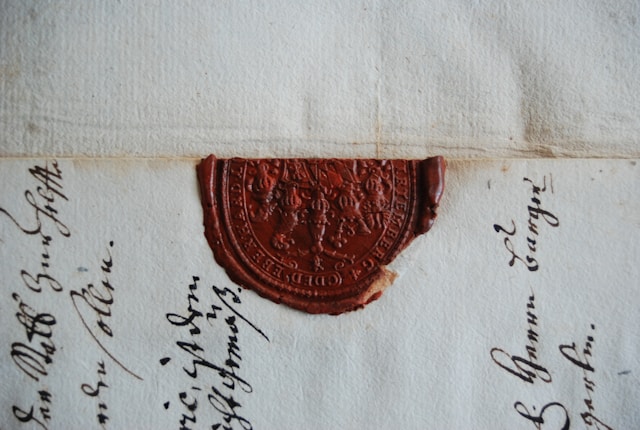
What does an apostille certificate look like?
The form is standardized by the Hague Convention and includes the heading Apostille (Convention de La Haye du 5 octobre 1961).
The certificate identifies information such as:
- country
- person who signed the public document
- capacity in which that person acted
- seal or stamp, where applicable
- place of certification
- date
- issuing authority
- apostille number
- official seal or stamp
- signature
The apostille may be attached to the underlying document as a separate certificate.
Is an apostille the same as legalizing a document at an embassy?
No.
Under the traditional legalization system, a document authenticated in Canada might then have to be presented to the destination country's embassy or consulate for legalization.
The Apostille Convention generally removes that legalization requirement between countries for which the Convention applies.
That is the central purpose of the Convention.
However, an embassy or consulate can still have separate procedural requirements for a consular service you are requesting. The fact that consular legalization is abolished does not mean foreign consulates have no document requirements at all.
Why do some websites still tell me to authenticate and legalize my document?
There are several possible reasons:
- the page has not been updated since Canada joined the Convention
- the destination country is outside the applicable Apostille Convention relationship
- the document falls outside the Convention
- the procedure involves a different consular requirement
- the terminology is being used loosely
For Canadian documents, information published before January 11, 2024 may describe the former system.
Always check the publication date and current government instructions.
What if I already have the old Canadian authentication stamp?
Global Affairs Canada explains that countries participating in the Apostille Convention generally expect authentication in the form of an apostille after Canada's accession.
A document bearing Canada's old red authentication stamp may therefore need to be resubmitted in a clean form for a new apostille if it is now being used in a Convention country.
For a non-Convention destination, older authentications may be treated differently.
Confirm before replacing the document.
Common apostille mistakes
Mistake 1: Not checking the destination country's requirements
A perfect apostille cannot repair a document that the recipient never asked for.
Mistake 2: Notarizing every document unnecessarily
Some Ontario public documents qualify for direct authentication.
Mistake 3: Sending an Ontario document to the wrong government office
Ontario, federal and other provincial documents can have different competent authorities.
Mistake 4: Trying to apostille a foreign public document in Ontario
Ontario generally cannot apostille the foreign government's underlying public document.
Mistake 5: Using a commissioner when an international notarial act is required
A commissioned document and a notarized document are not automatically equivalent for Ontario authentication.
Mistake 6: Remote notarization
Ontario currently states that remote notarization under the Notaries Act is not permitted and remotely notarized documents will not be apostilled by ODS.
Mistake 7: Ignoring translation requirements
The apostille does not eliminate the destination country's language requirements.
Mistake 8: Signing too early
A document that must be witnessed by a notary should not normally be signed beforehand unless the professional handling the matter confirms otherwise.
Mistake 9: Using the wrong version of a civil certificate
A recipient may require a particular government-issued version.
Mistake 10: Assuming the apostille validates the legal content
Authentication and substantive legal validity are separate issues.
Apostille checklist before you visit a notary
Before your appointment, try to answer these questions:
- Which country will receive the document?
- What organization in that country will receive it?
- What exact document did the recipient request?
- Does the recipient require the original or will a certified copy work?
- Does the document need notarization?
- Does the document have to be signed before a notary?
- Does every page need to be included?
- Does the document need a translation?
- Who is permitted to translate it?
- Does the recipient impose a date or freshness requirement?
- Is the document Ontario-issued, federally issued or foreign-issued?
- Which competent authority must issue the apostille?
A five-minute check before notarization can prevent days or weeks of unnecessary work later.
Frequently asked questions about apostilles in Ontario
What is an apostille in simple words?
An apostille is a government-issued authentication certificate that allows an eligible public document from one Hague Apostille Convention country to be recognized more easily in another Convention country.
Is an apostille a notary stamp?
No. A notary may perform the notarial act that makes certain documents eligible for government authentication, but the apostille itself is issued by a designated government competent authority.
Can a notary public issue an Ontario apostille?
No. Ontario apostilles are issued by the designated provincial competent authority, not by individual notaries.
Do I need a notary before getting an apostille?
Sometimes.
Private documents and certain other documents may require notarization. Several categories of Ontario public documents can qualify for direct authentication without prior notarization.
Can I get an apostille for an Ontario birth certificate?
Eligible Ontario vital-statistics documents can generally be submitted through Ontario's authentication process. Confirm which version of the birth certificate the foreign recipient requires.
Can I apostille an Ontario marriage certificate?
Yes, an eligible Ontario government-issued marriage certificate may qualify for authentication and apostille where the destination is covered by the Convention.
Can I apostille a Canadian passport?
Passport-related authentication can involve special requirements. Do not assume that a notarial copy is acceptable. Confirm the required format with the foreign recipient and the competent Canadian authority.
Can I apostille a Canadian driver's licence?
The appropriate route depends on what the foreign recipient requires. A notarial certified copy may sometimes be used, but you should confirm that the destination accepts it before proceeding.
Can I apostille a power of attorney?
A properly prepared and notarized Ontario power of attorney may be eligible for Ontario authentication and apostille. The foreign recipient should confirm the wording and formal requirements before signing.
Can I apostille a diploma?
Qualifying Ontario public postsecondary degrees and diplomas issued since January 1, 2019 may be eligible for direct Ontario authentication. Other education documents may have different requirements.
Can I apostille a court document?
Yes, qualifying Ontario court documents can be authenticated. Whether notarization is required depends partly on the document and its date of issuance.
Can I apostille an RCMP criminal record check in Ontario?
An RCMP document is a federal Government of Canada document, so Global Affairs Canada is generally the relevant competent authority for the original federal document. Always check the current federal requirements.
Can Ontario apostille a Ukrainian birth certificate?
Ontario generally does not authenticate foreign-issued public documents. A Ukrainian public document normally requires an apostille through the competent Ukrainian authority.
Can Ontario apostille a Russian birth certificate?
Generally no. A Russian public document is normally apostilled by the appropriate competent authority in Russia.
Do Canadian documents need an apostille for Ukraine?
When the Ukrainian recipient requires authentication, an eligible Canadian public document can generally use the apostille process because both Canada and Ukraine participate in the Hague Apostille Convention. Confirm the particular Ukrainian recipient's document and translation requirements.
Do Canadian documents need consular legalization for Russia after an apostille?
The Russian Consulate General in Toronto states that Russia and Canada participate in the Apostille Convention and that an apostilled document covered by the Convention does not require further consular legalization. Separate translation or procedure-specific requirements may still apply.
Do I need to translate my Canadian document for Ukraine?
Possibly. The apostille does not replace translation. Confirm the translation requirements with the Ukrainian authority receiving the document.
Do I need to translate my Canadian document for Russia?
Russian authorities commonly require Russian-language translations for foreign documents in many procedures. The required translator and certification method depend on the particular Russian procedure.
Can I get an apostille for a photocopy?
Possibly, if an appropriate notarial certified copy is acceptable and eligible for authentication. But some document categories require the original or an issuer-certified copy. Check first.
Can I use an apostilled certified copy instead of my original diploma?
Sometimes. Global Affairs Canada notes that a certified copy can be useful when a person wants to preserve an original document, but the destination country must accept the certified-copy format.
Does an apostille prove the document is genuine?
It authenticates the relevant public signature, capacity and seal or stamp. It does not ordinarily verify every underlying fact in the document.
Does an apostille make a contract legally valid abroad?
No. It does not decide whether a contract is enforceable or legally sufficient under foreign law.
Does an apostille guarantee acceptance?
No. The receiving authority remains responsible for deciding whether the document satisfies its substantive and procedural requirements.
Does an apostille expire?
The apostille certificate itself generally does not have a built-in expiry date, but the receiving authority may require the underlying document to have been issued recently.
Can an apostille be rejected?
A receiving authority may reject a document for reasons unrelated to the apostille, such as using the wrong document, missing translation, expired underlying document or failure to follow a procedure-specific requirement.
Can I walk into ServiceOntario and get an apostille?
Ontario currently provides in-person submission options at designated locations, but service availability, appointments, processing method and document eligibility should be checked on the official Ontario page before attending.
Can I mail my document to Ontario for an apostille?
Yes. Ontario provides a mail-in process through Official Documents Services. Current forms, fees, payment methods and mailing instructions should be confirmed immediately before submission.
Can I email Ontario a scan instead?
Ontario currently requires hard-copy documents for authentication. A digital scan by itself is not authenticated through the ODS process.
How many apostilles do I need?
Ontario states that an authentication certificate or apostille is issued for each document request. Whether several pages form one document or several separate documents depends on the documents and submission structure. Confirm before filing a large package.
A useful way to think about the process
There are four separate questions:
- Is this the correct document?
- Does it need a notarial act?
- Which government authority authenticates it?
- What does the foreign recipient require after authentication?
Many apostille problems happen because people start with question three and skip questions one and two.
Example: a Canadian document for an inheritance in Ukraine
Consider this scenario.
Olena lives in Scarborough. Her father died in Ukraine, and she needs to participate in an inheritance matter there.
The Ukrainian notary requests a power of attorney and proof of Olena's Canadian name change.
A sensible process might involve:
- The Ukrainian notary confirms the exact power-of-attorney wording.
- Olena obtains the required Ontario name-change or marriage document in the form requested.
- The power of attorney is executed before an Ontario notary.
- The power of attorney receives an Ontario apostille.
- The eligible Ontario civil-status certificate follows the correct direct-authentication route if applicable.
- The required Ukrainian translations are completed in the manner requested by the Ukrainian notary.
- The documents are sent to Ukraine.
Notice that two documents in the same matter may follow different preparation routes before reaching the same apostille authority.
Example: Canadian documents for a Russian citizenship or passport procedure
A Russian citizen living in Toronto may be asked by a Russian consular office to prove a marriage, divorce or name change that occurred in Canada.
The relevant Canadian civil document may need an apostille and a Russian translation satisfying the consular instructions.
The Russian Consulate General in Toronto currently publishes guidance stating that Canadian documents concerning matters such as name changes can require an apostille for Russian consular procedures.
The person should follow the current instructions for the exact consular service, not a generic apostille checklist from another transaction.
Example: starting a business abroad
An Ontario corporation wants to register a branch office in another Convention country.
The foreign corporate registry asks for:
- articles of incorporation
- recent corporate registry extract
- board resolution appointing a local representative
- power of attorney
The documents may not all follow the same route.
The Ontario registry documents might qualify for direct authentication, while the private resolution or power of attorney may need notarization before apostille.
This is why a document-by-document review matters.
Example: studying abroad
A graduate from an Ontario public university is accepted into a foreign postgraduate program.
The foreign university requests:
- diploma
- transcript
- apostille
- certified translation
The diploma and transcript may qualify for direct Ontario authentication if they satisfy the postsecondary criteria. But the foreign university might also require the transcript to arrive directly from the issuing university.
Both requirements may need to be satisfied.
An apostille does not override the university's admissions rules.
Why recipient instructions are more important than internet checklists
No universal checklist can tell every applicant exactly which document a foreign organization will accept.
Two people using seemingly identical Ontario birth certificates may receive different instructions because one document is for:
- a citizenship application
while the other is for:
- inheritance
- marriage
- school registration
- immigration
- property registration
Likewise, two offices in the same country may have different procedural requirements.
The safest sequence is:
Recipient requirement first, document preparation second, apostille third.
How to avoid paying twice
Before obtaining any service, send the receiving organization a short written question:
I have a Canadian document issued in Ontario. Do you require the original government-issued document with an apostille, or will you accept a notarized certified true copy with an apostille? Please also confirm your translation requirements.
That single question can prevent unnecessary notarization, replacement certificates, duplicate apostilles and courier costs.
A note about online information and outdated instructions
Canada's apostille system is relatively new.
Any guide that still says every Canadian document must first go to Global Affairs Canada and then to a foreign consulate may be describing the system that existed before January 11, 2024.
Likewise, older pages may show outdated Ontario submission addresses or fees.
For current information, prioritize:
- Government of Ontario
- Global Affairs Canada
- HCCH
- the official foreign embassy or consulate
- the actual organization receiving your document
Final practical summary
If someone tells you, “You need an apostille,” do not immediately run to a notary or send the document to Ottawa.
First determine:
- what exact document is required
- where it was issued
- whether it needs notarization
- which Canadian competent authority handles it
- whether the destination is within the Hague Apostille Convention
- whether a translation is required
- whether the foreign recipient has additional rules
For many Ontario residents, the process is now substantially simpler than it was before January 11, 2024.
A qualifying Ontario public document can often go directly to Ontario's competent authority. A private document may first need an Ontario notarial act. An eligible federal document may belong with Global Affairs Canada. A Ukrainian or Russian public document generally remains the responsibility of the competent authority in the country where it was issued.
Understanding that distinction is the key to getting the apostille process right.
Practical note: An apostille is an authentication certificate issued by a designated government competent authority. A notary public may prepare or notarize certain documents for authentication but does not issue the Ontario apostille. Document eligibility and foreign-recipient requirements vary. Confirm the destination country's current requirements before notarization or submission. This article provides general information and is not legal advice.
Official sources and further research
ReferencesReview sources
These links are provided as a courtesy so you can review the sources yourself.
- Government of Ontario: Authenticate a document for use outside Canada
- Government of Ontario: Information for notaries public in Ontario
- Ontario Notaries Act, R.S.O. 1990, c. N.6
- Government of Ontario: Find a notary public or commissioner of oaths
- Government of Ontario: Differences between commissioners and notaries
- Global Affairs Canada: Authentication of documents
- Global Affairs Canada: Authentication requirements
- Global Affairs Canada: Authentication frequently asked questions
- Global Affairs Canada: Authentication glossary
- Global Affairs Canada: Authentication notices and updates
- Government of Canada: Canada joins the Apostille Convention
- Government of Canada: Improving authentication services in Canada
- HCCH: Full text of the 1961 Apostille Convention
- HCCH: Apostille Convention status table
- HCCH: Canadian competent authorities under the Apostille Convention
- HCCH: Apostille Convention enters into force for Canada
- HCCH: Second Edition of the Practical Handbook on the Operation of the Apostille Convention
- Ministry of Foreign Affairs of Ukraine: Apostille
- Ministry of Foreign Affairs of Ukraine: Apostille and legalization information
- Consulate General of the Russian Federation in Toronto: Apostille guidance
- Consulate General of the Russian Federation in Toronto: Russian-language apostille guidance
- Government of Canada: Canada-Ukraine relations
- Government of Canada: Canada-Russia relations